Mike Rubbo has made some great cycling films. He is on a mission to bring back the old style sit up cycle into Australia. This film I think is one of his best. It is his suggestion to Tony Abbott to show a bit of leadership and help transform our cities. It's well worth a look:
Friday, 13 August 2010

Wednesday, 11 August 2010
Melbourne making the news
One of my favourite things about people is their varying interests and how passionate they can be about them. I used to love watching the medieval fighting club at university in orientation week. Some of them travel around the world with their cardboard swords and shields for meetups.
The internet has made pursuing your interests much easier and more rewarding. You can get to know people from around the world who share you particular passion. I have a peculiar interest in looking at pictures of pretty women on bicycles. It is as if Copenhagen Cycle Chic was invented just for me but amazingly there are people everywhere not only following that site but making their own copies.
I also have a bizarre obsession with railway trains.
With the Internet, news in your particular area of interest can travel very quickly. And so it is with Melbourne's new bike share scheme. It is a great idea that is just not catching on. It has been discussed on Copenhagenize, Mike Rubbo's site, Real Cycling and also by that sarcastic guy from Waltham Forest in London. And it's not looking good. Even Andrew Bolt had a serve.

The general concensus seems to be that mandatory helmet laws are getting in the way of it. The argument is that the bike share scheme is aimed at tourists and other people who may wish to make a quick trip on a bike. The helmet laws remove all spontenaity. If you are a tourist planning to spend a day exploring Melbourne on a bike, you'll probably think ahead and organise headgear. If you are an office worker going to a meeting on the other side of the CBD but close to another docking station, you may suddenly have a brainwave and what to take a hire bike but the lack of headgear gets in the way.
I think it is impossible to say for sure whether it is all to do with the helmet laws but I think there is an argument there. Unsurprisingly, the issue has raised yet again the helmet debate. I am no expert but I have tried to read up on the subject and from what I can tell, whether helmets offer protection and the extent of that protection depend on the study. It is not conclusive either way but if Melbourne bike hire is anything to go by, they do seem to be a barrier to cycling.
The concensus on the blogs I have read seems to be to let adults decide. I have to say it is a view I support. If you are speeding along a main road on a road bike in a racing position, you will probably wear a helmet. If you are speeding down a hill on your mountain bike, you will probably also wear a helmet but I think a different type. Perhaps not so though if you are pottering through the neighbourhood on your Dutch granny bike with a baguette and some leeks in the basket.
Where they are not compulsory, people seem to wear helmets for different reasons. It may simply be because it makes your husband or wife feel better (I would probably be one of them if helmets were not mandatory).
My biggest problem with mandatory helmet laws, particularly in this country, is that they have become a cop out. Every piece of government published literature about cycling warns people to wear bright yellow and put on a helmet but there is really nothing else done to protect cyclists. Helmets may indeed make a difference in certain limited circumstances but they are of limited use when you are hit behind by a car travelling at 60 km/h or hit from the side by a truck with a bullbar.
I do not think that helmets themselves discourage cycling. Mandatory helmet laws might but the strongest deterrent is the lack of genuine safety. If people do not feel safe using roads, they will not do so and will not allow their children too. Those countries where cycling's modal share is highest do not have mandatory helmet laws, although many people choose to wear them, but they do have something very different from those countries with a low cycling modal share.s
Looking around the world, there is a clear link between cycling's modal share and the quality of infrastructure. Even inside the Netherlands, cycling's modal share varies between cities and the quality of the infrastructure you find there. Stephen Yarwood is totally on the right track.

The internet has made pursuing your interests much easier and more rewarding. You can get to know people from around the world who share you particular passion. I have a peculiar interest in looking at pictures of pretty women on bicycles. It is as if Copenhagen Cycle Chic was invented just for me but amazingly there are people everywhere not only following that site but making their own copies.
I also have a bizarre obsession with railway trains.
With the Internet, news in your particular area of interest can travel very quickly. And so it is with Melbourne's new bike share scheme. It is a great idea that is just not catching on. It has been discussed on Copenhagenize, Mike Rubbo's site, Real Cycling and also by that sarcastic guy from Waltham Forest in London. And it's not looking good. Even Andrew Bolt had a serve.

The general concensus seems to be that mandatory helmet laws are getting in the way of it. The argument is that the bike share scheme is aimed at tourists and other people who may wish to make a quick trip on a bike. The helmet laws remove all spontenaity. If you are a tourist planning to spend a day exploring Melbourne on a bike, you'll probably think ahead and organise headgear. If you are an office worker going to a meeting on the other side of the CBD but close to another docking station, you may suddenly have a brainwave and what to take a hire bike but the lack of headgear gets in the way.
I think it is impossible to say for sure whether it is all to do with the helmet laws but I think there is an argument there. Unsurprisingly, the issue has raised yet again the helmet debate. I am no expert but I have tried to read up on the subject and from what I can tell, whether helmets offer protection and the extent of that protection depend on the study. It is not conclusive either way but if Melbourne bike hire is anything to go by, they do seem to be a barrier to cycling.
The concensus on the blogs I have read seems to be to let adults decide. I have to say it is a view I support. If you are speeding along a main road on a road bike in a racing position, you will probably wear a helmet. If you are speeding down a hill on your mountain bike, you will probably also wear a helmet but I think a different type. Perhaps not so though if you are pottering through the neighbourhood on your Dutch granny bike with a baguette and some leeks in the basket.
Where they are not compulsory, people seem to wear helmets for different reasons. It may simply be because it makes your husband or wife feel better (I would probably be one of them if helmets were not mandatory).
My biggest problem with mandatory helmet laws, particularly in this country, is that they have become a cop out. Every piece of government published literature about cycling warns people to wear bright yellow and put on a helmet but there is really nothing else done to protect cyclists. Helmets may indeed make a difference in certain limited circumstances but they are of limited use when you are hit behind by a car travelling at 60 km/h or hit from the side by a truck with a bullbar.
I do not think that helmets themselves discourage cycling. Mandatory helmet laws might but the strongest deterrent is the lack of genuine safety. If people do not feel safe using roads, they will not do so and will not allow their children too. Those countries where cycling's modal share is highest do not have mandatory helmet laws, although many people choose to wear them, but they do have something very different from those countries with a low cycling modal share.s
Looking around the world, there is a clear link between cycling's modal share and the quality of infrastructure. Even inside the Netherlands, cycling's modal share varies between cities and the quality of the infrastructure you find there. Stephen Yarwood is totally on the right track.
(Borrowed from here)
Cycle instead
With moderate fanfare, the Department of Transport, Energy and Infrastructure has set up a new website called "Cycle Instead". We are told it "generates cycling routes using Adelaide's Bikedirect network of main roads, bike lanes, local streets, off-road paths and some unsealed paths".
I had a go on it and asked for the route from Kensington Gardens to the CBD. It involves a long ride along Kensington Road, across Brittania Roundabout, along Dequetteville Terrace and then take the fast Formula 1 bend into Flinders Street. If you are in a car, the route is probably perfect.
I won't be sending my children on that route in any hurry though.
If you click "low traffic" on the Route Type dropbox, you get a change. The route as far as Dequetteville Terrace is good (you avoid the roundabout at least) and it includes the pathways through the parklands.
This seems to be a good initiative if you are jumping on a bike to travel to work for the first time. If you have been commuting for any length of time, you would probably have already worked out your favoured route. It is not bad but far more effective I think would be proper signposted routes like the suggested Bike Boulevard through Beulah Road with decent treatment at intersections.

I had a go on it and asked for the route from Kensington Gardens to the CBD. It involves a long ride along Kensington Road, across Brittania Roundabout, along Dequetteville Terrace and then take the fast Formula 1 bend into Flinders Street. If you are in a car, the route is probably perfect.
I won't be sending my children on that route in any hurry though.
If you click "low traffic" on the Route Type dropbox, you get a change. The route as far as Dequetteville Terrace is good (you avoid the roundabout at least) and it includes the pathways through the parklands.
This seems to be a good initiative if you are jumping on a bike to travel to work for the first time. If you have been commuting for any length of time, you would probably have already worked out your favoured route. It is not bad but far more effective I think would be proper signposted routes like the suggested Bike Boulevard through Beulah Road with decent treatment at intersections.

(pinched from here)
Tuesday, 10 August 2010
What Kevin Costner said
One of my favourite websites is George Monbiot's blog. He is a columnist with the Guardian.
His most recent entry, called Turning Estates into Villages, summarises particularly well the effect that our built environment has on us. He is right of course. You can see it every day. There is a direct relationship between the built environment and how many children you see playing, how many people walk to the shops or to visit their neighbours and also how many people choose to walk or cycle generally. Those places with wide, fast-moving roads have fewer people walking or cycling. This is nothing new of course. Look what happens when Rundle Street is closed during the Fringe.
When people campaign tirelessly to try and calm traffic, to try and have a school built within walking distance of where they live, to try and have roads narrowed and separate bike paths installed, it is not part of a war on motorists and it is not because they are trying to impose their own form of social engineering on everyone else. It is because these things work. They are connected. The taxes you pay can be used to fund any number of education campaigns about fitness and healthy eating but in the end, people are entirely rational and act in a way that makes perfect sense taking into account their surroundings.
As Kevin Costner said, before he went a bit bonkers and grew gills in that strange film with lots of water, "build it and they will come".
Streetfilms has made the point brilliantly (again) in their latest film about Copenhagen. This time they're describing how the city authorities have calmed traffic and made car-free public spaces.
His most recent entry, called Turning Estates into Villages, summarises particularly well the effect that our built environment has on us. He is right of course. You can see it every day. There is a direct relationship between the built environment and how many children you see playing, how many people walk to the shops or to visit their neighbours and also how many people choose to walk or cycle generally. Those places with wide, fast-moving roads have fewer people walking or cycling. This is nothing new of course. Look what happens when Rundle Street is closed during the Fringe.
When people campaign tirelessly to try and calm traffic, to try and have a school built within walking distance of where they live, to try and have roads narrowed and separate bike paths installed, it is not part of a war on motorists and it is not because they are trying to impose their own form of social engineering on everyone else. It is because these things work. They are connected. The taxes you pay can be used to fund any number of education campaigns about fitness and healthy eating but in the end, people are entirely rational and act in a way that makes perfect sense taking into account their surroundings.
As Kevin Costner said, before he went a bit bonkers and grew gills in that strange film with lots of water, "build it and they will come".
Streetfilms has made the point brilliantly (again) in their latest film about Copenhagen. This time they're describing how the city authorities have calmed traffic and made car-free public spaces.
Monday, 2 August 2010
Two articles
There have been two articles of note on Adelaide Now of late. The first was about Stephen Yarwood's plan for proper bike lanes around the city. He plainly knows what he is talking about. He was in Copenhagen recently for the Velo City Conference with a bunch of urban planners from around the world. Also, listen to what he has to say on Angus Kingston's blog.
Stephen is running for Adelaide City Mayor and civilising Adelaide's traffic is one of his plans. He is not deterred by what happened in Sturt Street and is encouraging us to learn from it to get it right next time. As he says, the first one "was flawed because the lane installed on Sturt St was not actually the same style used in Copenhagen and was not integrated".
The second article was along similar lines. Mariano De Duonni, from urban design firm Hassell, correctly says that the mistake we have made so far is that our approach to bike lanes has been from an engineering point of view and not an integrated design point of view.
Both articles attracted a lot of positive and supportive comments. Gotta love that.
Stephen is running for Adelaide City Mayor and civilising Adelaide's traffic is one of his plans. He is not deterred by what happened in Sturt Street and is encouraging us to learn from it to get it right next time. As he says, the first one "was flawed because the lane installed on Sturt St was not actually the same style used in Copenhagen and was not integrated".
The second article was along similar lines. Mariano De Duonni, from urban design firm Hassell, correctly says that the mistake we have made so far is that our approach to bike lanes has been from an engineering point of view and not an integrated design point of view.
Both articles attracted a lot of positive and supportive comments. Gotta love that.
Friday, 30 July 2010
Adelaide Cycle Chic

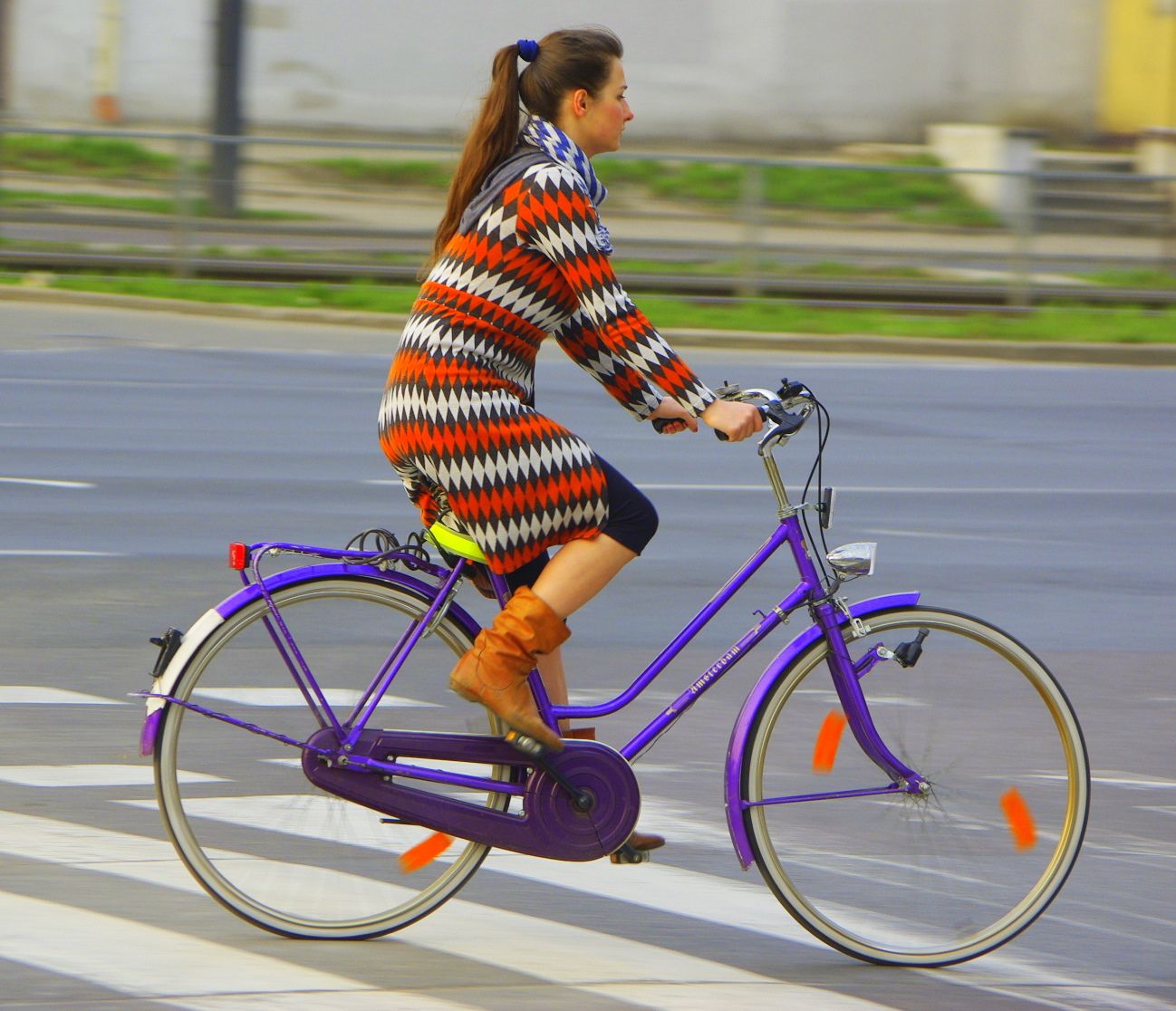
I don't know who she is but she looks fabulous. I'm starting to see more and more people like this around Adelaide. It's reminiscent of Copenhagen Cycle Chic and its related sites. Love it.
Friday, 16 July 2010
Sturt Street again

The new State member for Adelaide, Rachel Sanderson, was kind enough to leave her new newsletter in my mailbox the other day. The front page talks about a "win" for Sturt Street. Apparently, a "win" is constituted by taking away a bike lane and setting aside public space at no cost solely for the purpose of storing people's cars.
The picture as you see shows Rachel and a business owner blocking the lane and looking along it with stern faces. Rachel kindly presented a petition to the House of Assembly that "showed" that the bikeway resulted in poor road layout, an increase in accidents, caused congestion, confusion, diminished parking and loss of revenue for local businesses.
That is quite a list of assertions and they cannot go unchallenged.
What makes a "poor road layout" is not made clear. It is probably the same thing that "caused confusion". When you're talking about motorists, that is usually code for bleating because the road layout has changed a little and it is too taxing to slow down and actually make the effort to look around for non-motorised road users. All of the bleating, by a vocal minority, was because cars pulling out of side streets actually had to stop and make sure the road was clear. Contrary to popular opinion, that does not make the road dangerous. It has been shown, paradoxically, that a road that is perceived to be damgerous is actually safer because it makes people slow down and concentrate more.
How the bike lane "caused" accidents is equally unclear. How it physically did it remains a mystery to me. I guess it is like the dangerous trees on the side of some country roads that can crash into cars.
The claim of diminished parking is at least honest. The complaint, on behalf of a few spoiled motorists, is that a few free car parks have been taken away and reclaimed by more a more efficient use of the space. As you can see though, that simply won't do. Motorists should be allowed to park wherever they want across the CBD at no cost. It's a human right.
The "loss of revenue" for local businesses is a common myth and has been disproved time and time again.
The smaller article on the same page for me says it all really. Taking away the one piece of proper cycling infrastructure (even though it may have been poorly implemented) is described as a "win". None of the complainers were asked "how could this work?" Instead, we take pride of place as probably the only city in the world that has cocked up a cycle lane and removed it within 18 months without even properly trying. The answer to increasing the rate of people travelling by bike and thereby reducing all of the noise and congestion is "cycle safe coaching". In other words, the same tired old rubbish - proven to fail.
The article almost asks the right question with "Do you feel unsafe cycling in the city?" That question assumes the person already is cycling. If they are, they certainly do not require the sort of patronising training the article is talking about. The question that should have been asked is "Would you feel unsafe cycling in the city if you chose to get around that way?" The answer would invariably be "yes". You should then ask why. The answer will not be "Because I need Cycle Safe Coaching". It will be "because it is unsafe. I do not trust motorists to see me. Until there is proper separated infrastructure for people travelling by bike, I will continue to travel by car. I know it just adds to congestion but it feels much safer to me."
Subscribe to:
Posts (Atom)

